 Enlarge Image
Boethius, Manlius Severinus Boethius (c. 480 – 524 AD)
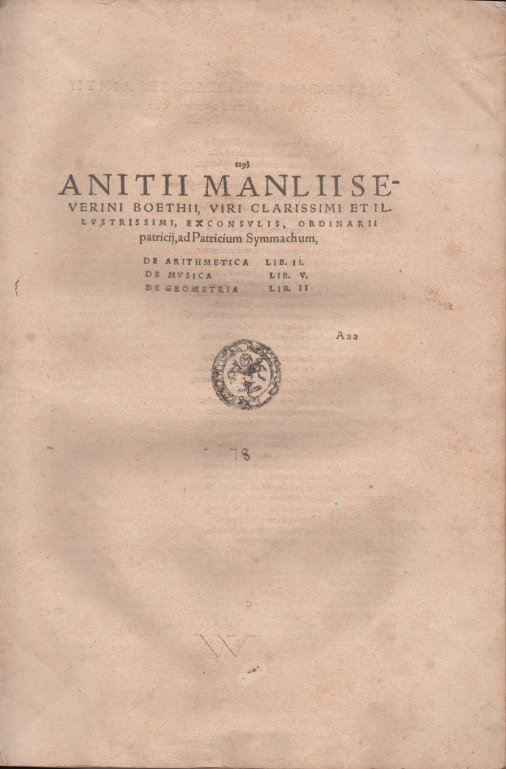
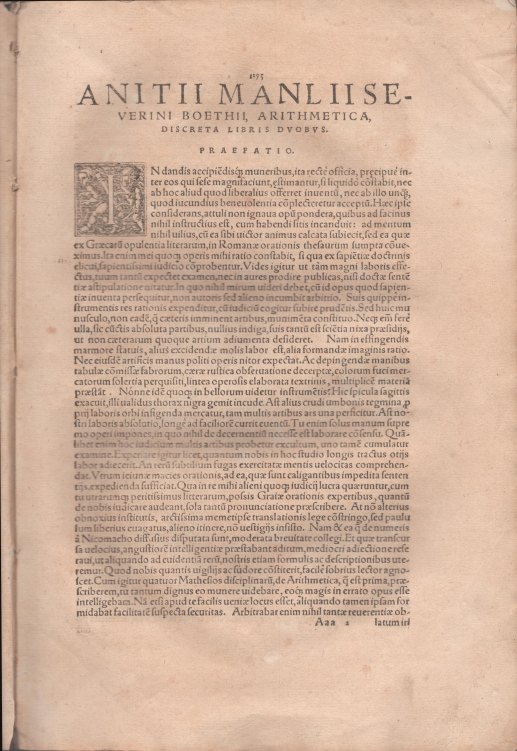
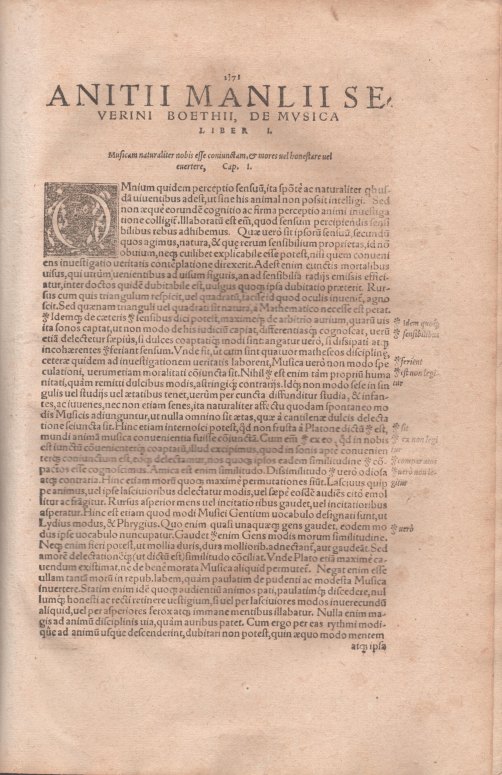
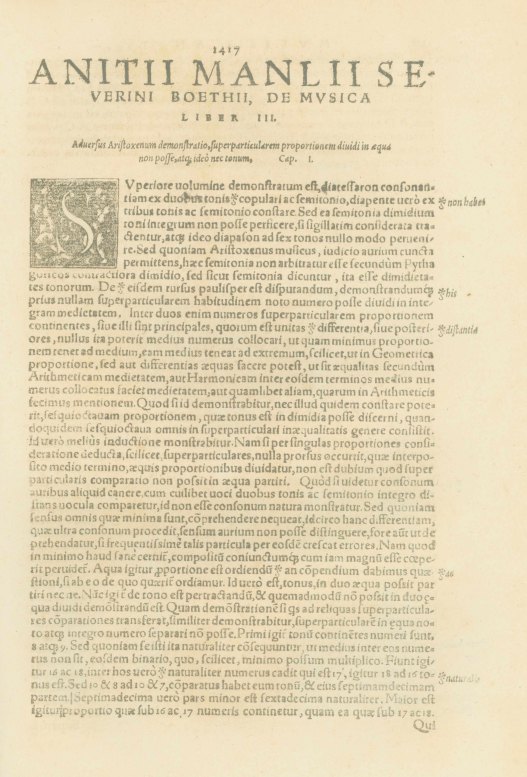
De Arithmetica, De Musica and De Geometrica. Latin text
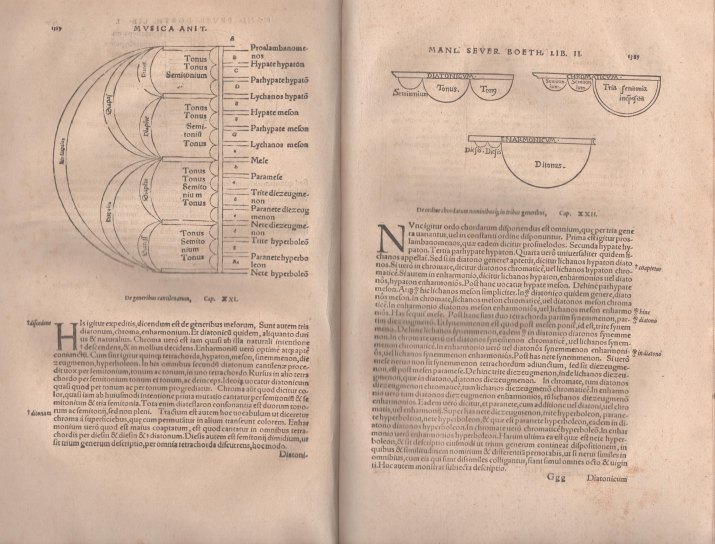
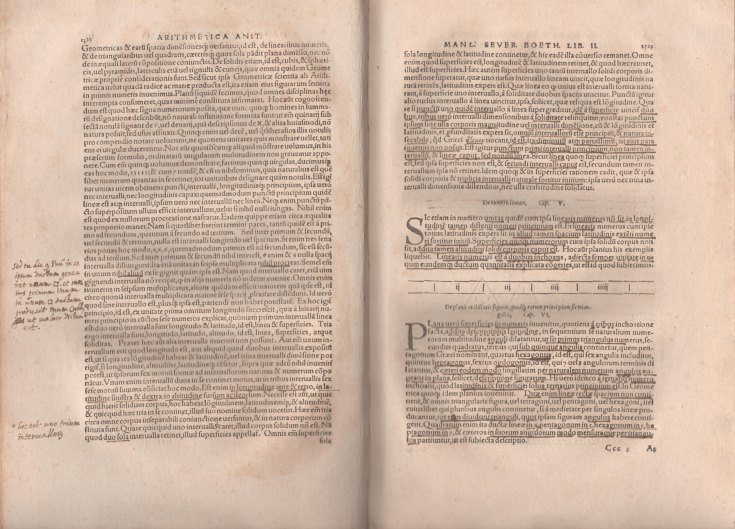
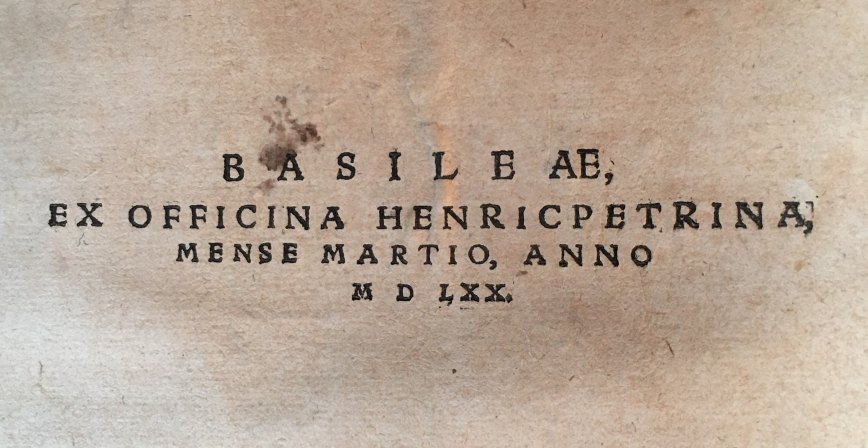
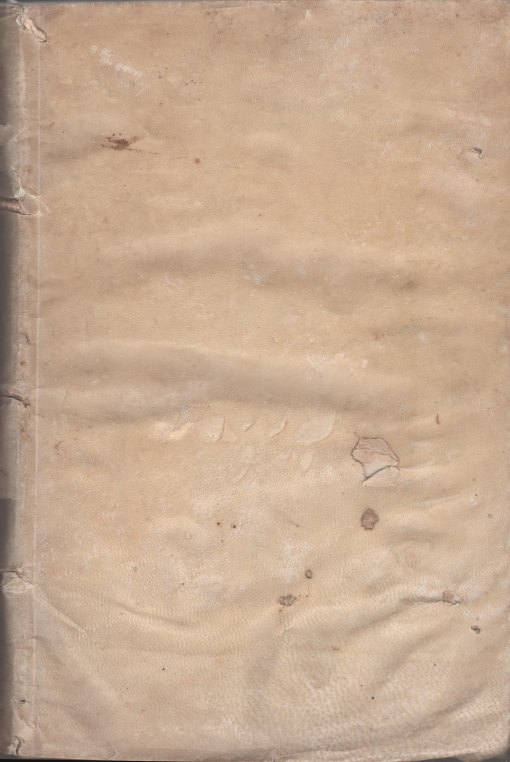
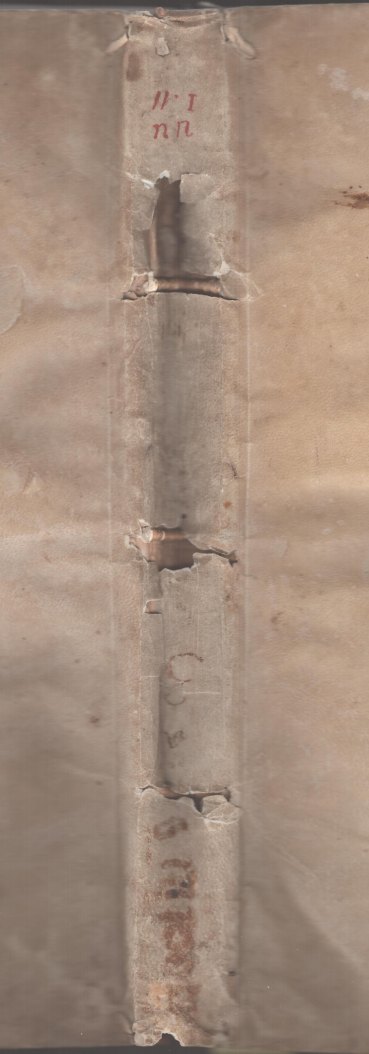
Small handwritten markings in the margins of pp. 1301, 1348, and 1351; more extensive markings and under-linings on pp. 1324, 1328-9, 1336-7, and 1338-1345. Basel, March, 1570. Quarto. 253 pp. + blanks at either end, with imprinted pagination 1296-1546. Illustrated diagrams throughout with complex visual schematics. Early vellum binding. Internally in fine condition except for a little browning, particularly in Arithmetica. The binding has several holes including on the spine in De Arithmetica.According to the Schoenberg Institute for the Manuscript Study at the University of Pennsylvania, "While Boethius’ De consolatione philosophiae was often reprinted, his other works including these three were less frequently copied in the Renaissance. Nevertheless, the De musica was included in the first printed edition of Boethius’ works, in Venice in 1491 and '92 and remained a fundamental reference work on music theory and harmonics. The work put forward the influential notion of a tripartite division of musical types: the imperceptible music of the spheres, the spiritual and somatic music of the body, and the audible instrumental music of voice and instrument".
Boethius was imprisoned and executed for conspiracy. While awaiting execution he wrote his best-known work, De consolatione philosophiae. It has been a famous classic example of “prison literature” for over a thousand years.
